More Australians are choosing to invest in property in Dubai than ever before. Local yields are shrinking, tax burdens are rising, and entry prices across Sydney and Melbourne are climbing beyond justification.
Dubai, by contrast, offers gross rental yields of 8 to 12%, zero tax on income, and a transparent legal framework for foreign buyers.
This guide covers everything Australian investors need to know before taking their first step into the UAE property market in 2026.
Why Australians Invest in Property in Dubai

The decision to invest in property in Dubai rarely comes from impulse. It comes from comparing numbers and finding that Dubai wins on almost every metric. Here is a detailed look at the three strongest reasons Australian investors are turning to the UAE.
Yield Gap Is Too Big to Ignore
Sydney gross rental yields currently average 2.8 to 3.5%, according to CoreLogic. Melbourne sits between 3.2 and 3.8%. Brisbane reaches 3.5 to 4.2% in its best suburbs.
Australians who invest in property in Dubai access gross yields of 8 to 12% in high-demand zones. That figure comes directly from Dubai Land Department transaction records, not developer projections. After factoring in zero UAE income tax, the net return comparison is not even close.
Consider this: a Brisbane investor earning 3.8% gross and paying 37% tax nets roughly 2.4%. An equivalent Dubai investment at 9% gross with no UAE tax produces a dramatically stronger outcome, even after Australian tax obligations on overseas income.
Dubai’s Growing Population Drives Demand
Rental demand in Dubai is structural, not speculative. According to the Dubai Statistics Centre, Dubai’s population exceeded 3.6 million in 2025. It continues to grow through skilled worker migration and expanding UAE visa programmes.
The UAE’s ongoing economic expansion under Vision 2040 continues to attract global businesses and professionals to Dubai. This sustained inflow directly supports rental pricing and occupancy rates across all major investment precincts.
A Zero Tax Market for Overseas Owners
The UAE charges no income tax on rental earnings. There is no capital gains tax on property sales. There is no stamp duty on purchases and no land tax for foreign owners.
Australians who invest in property in Dubai must still declare rental income to the Australian Taxation Office and pay Australian income tax at their marginal rate. However, the removal of a UAE tax layer means significantly more income is retained before Australian obligations apply.
For investors in the 37 to 45% Australian tax bracket, this structural advantage improves net yield considerably. Advisors at the Dubai Property Expo Australia explain this framework clearly for every attendee.
Best Locations to Invest in Property in Dubai
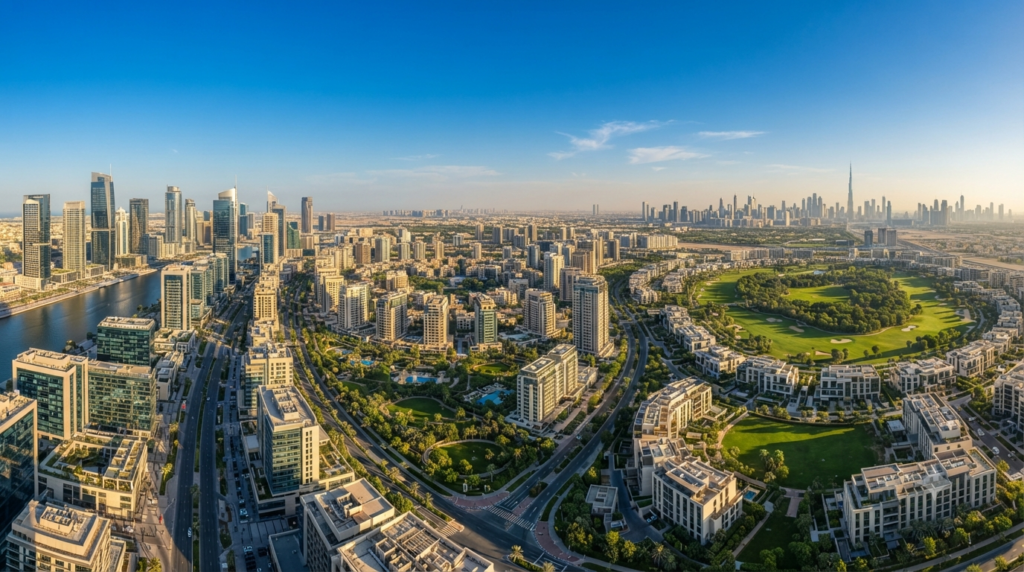
Location is the single most important decision when you invest in property in Dubai. Yield, occupancy, and capital growth all vary significantly across the city’s freehold zones. These three precincts deliver the strongest and most consistent results for Australian investors.
Jumeirah Village Circle
JVC is the top high-yield precinct for Australians looking to invest in property in Dubai at an accessible entry price. Gross yields in JVC regularly reach 8 to 10%, according to Dubai Land Department data.
Studio and one-bedroom apartments in JVC start from approximately AUD 150,000, subject to developer confirmation. Strong demand from young professionals and relocating families keeps occupancy rates high throughout the year.
Developers, including Imtiaz, Binghatti, and Ellington, all have active off-plan projects in JVC. These suit Australian investors targeting yield-focused assets with lower upfront capital requirements.
Business Bay
Business Bay sits directly beside Downtown Dubai and the Burj Khalifa. It is Dubai’s primary commercial district and one of the strongest rental markets in the city.
Investors who choose to invest in property in Dubai through Business Bay benefit from strong liquidity on the secondary market. Re-selling a Business Bay unit is considerably easier than selling in less-established precincts. Read our full overview of Dubai investment properties for a deeper look at precinct comparisons.
Dubai Hills Estate
Dubai Hills Estate suits investors seeking a balance of yield and long-term capital growth. This Emaar-developed master-planned community offers apartments, townhouses, and villas across a green, family-oriented environment.
Yields on apartments in Dubai Hills Estate range from 6 to 8%. Family villas and townhouses deliver stronger capital appreciation, driven by genuine owner-occupier demand and limited land supply.
Properties in Dubai Hills Estate frequently exceed the AED 2 million UAE Golden Visa threshold. Australian investors targeting a second residency alongside a strong investment return find this precinct particularly compelling. For the full Golden Visa breakdown, read our guide on buying property in Dubai for the Golden Visa.
How to Invest in Property in Dubai
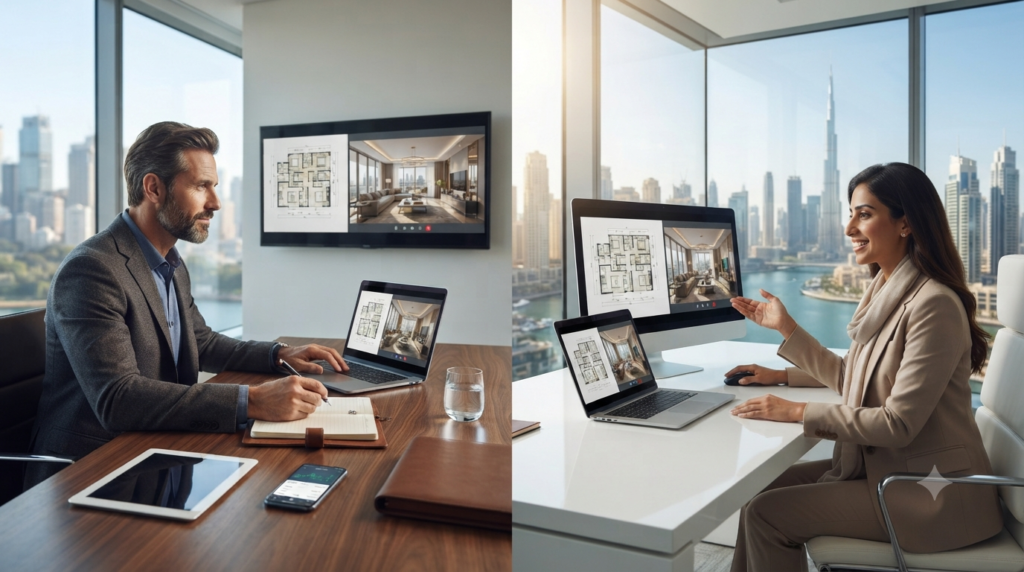
The process of choosing to invest in property in Dubai from Australia is far more straightforward than most investors expect. The full purchase can be completed remotely without visiting the UAE.
Set Your Investment Strategy First
Before you invest in property in Dubai, define what outcome you are targeting. Are you focused on maximum rental yield? Are you building toward UAE Golden Visa eligibility? Are you investing through an SMSF?
Your goal determines the right precinct, asset type, and developer for your situation. A yield-focused investor belongs in JVC or Business Bay. A capital growth investor belongs in Dubai Hills Estate or Dubai Creek Harbour. A Golden Visa investor needs an asset of AED 2 million.
Arriving at the Dubai property show with a defined strategy makes every developer conversation far more productive. Bring your budget, your timeline, and your income goals.
Off-Plan vs. Ready Property
Australians who invest in property in Dubai have two primary purchase options. Understanding the difference helps you make the right choice for your situation.
Off-plan properties are purchased directly from developers during or before construction. Key advantages include:
- Lower entry prices compared to completed equivalents
- Interest-free payment plans spread across the construction timeline
- Stronger capital appreciation between purchase and handover
- Wider choice of units, floors, and orientations
Ready properties are fully completed and available for immediate rental income. Key advantages include:
- No construction risk or timeline uncertainty
- Rental income starts immediately after settlement
- What you see is exactly what you buy
- Easier to assess true rental yield based on comparable tenancies
Most Australian investors entering the Dubai market for the first time choose off-plan assets for the payment plan flexibility and lower entry cost. For a complete walkthrough of the ownership framework, read our guide on Dubai freehold properties for foreigners.
Complete the Purchase from Australia
Australians do not need to travel to Dubai to invest in property there. The full process runs as follows:
- Attend the Dubai Property Expo Australia and select your preferred project
- Pay a booking deposit of 5 to 10% to secure your unit at the agreed price
- Sign the Sales Purchase Agreement electronically or via Power of Attorney
- Make payments according to the developer’s interest-free payment plan schedule
- Receive your Dubai Land Department Title Deed on project completion
All buyer funds on off-plan projects are held in government-audited escrow accounts under RERA regulations. Funds are only released to the developer at verified construction milestones. This provides meaningful legal protection for Australian investors throughout the process.
Costs of Investing in Dubai Property

Understanding the full cost structure is essential before you invest in property in Dubai. The good news is that costs are lower than most Australian investors expect.
Upfront Costs to Budget For
The core purchase costs when you invest in property in Dubai are:
- Dubai Land Department transfer fee — 4% of the purchase price, paid at title registration
- Property registration trustee fee — approximately AED 4,000 (around AUD 1,600)
- Booking deposit — typically 5 to 10% of the purchase price, paid to the developer
There is no stamp duty equivalent beyond the DLD transfer fee. There is no mortgage registration fee if you purchase through a developer payment plan. For a detailed step-by-step cost breakdown, read our full guide on how to buy property in Dubai from Australia.
Ongoing Ownership Costs
Annual ownership costs for Australian investors who invest in property in Dubai are straightforward:
- Annual service charges — comparable to Australian strata levies, published on the RERA service charge index
- Property management fees — 5 to 10% of annual rental income for full management services
- No land tax — unlike Victoria and New South Wales, Dubai charges no land tax to foreign owners
- No council rates — building and community maintenance is covered entirely through the annual service charge
These ongoing costs are significantly lower than the equivalent cost structure across Australian capital cities.
Your Australian Tax Obligations
Investing in Dubai property does not remove your Australian tax obligations. The ATO requires all Australian residents to declare worldwide income, including rental earnings from overseas properties.
The absence of UAE tax on that income improves net yield considerably. Depreciation on overseas investment properties and legitimate expenses, including management fees and maintenance costs, may be deductible under ATO rules. Always work with a tax accountant experienced in overseas property investment from the outset.
Frequently Asked Questions
Is it safe to invest in property in Dubai as an Australian?
Yes. Dubai’s property market is regulated by RERA, which governs all developer activity and requires government-audited escrow accounts for off-plan buyer funds. Title deeds are registered with the Dubai Land Department, providing permanent legal protection for Australian investors.
How much do I need to invest in property in Dubai?
Entry-level apartments in high-yield zones start from approximately AUD 150,000, subject to developer confirmation. Golden Visa-qualifying assets start from approximately AUD 800,000, which equals AED 2 million at current exchange rates.
Can I invest in Dubai property through my SMSF?
Yes, under specific conditions. The investment must satisfy the ATO’s Sole Purpose Test, the SMSF trust deed must permit overseas assets, and no related party can use the property. Seek advice from a licensed SMSF specialist before proceeding.
Do I need to visit Dubai to invest in property there?
No. The full purchase process is completed remotely from Australia. Documents are signed electronically or via Power of Attorney. Many Australian investors own Dubai properties without having visited the UAE at the time of purchase.
What rental yields can I expect when I invest in property in Dubai?
High-demand investment zones, including JVC, Business Bay, and Dubai Marina, consistently deliver gross rental yields of 8 to 12%, according to Dubai Land Department transaction data. This compares to 2.8 to 4.2% across major Australian capitals.
Start Your Journey to Invest in Property in Dubai
Dubai offers Australian investors a genuine alternative to a compressed domestic market. Strong yields, zero UAE tax, government-regulated legal ownership, and accessible entry prices make the case compelling in 2026.
The Dubai Property Expo Australia gives you direct access to over 100 verified projects, licensed developers, and specialist advisors across Sydney, Melbourne, Brisbane, and Perth. Attendance is completely free, and there is no purchase obligation on the day.
Register your free place now at dubaipropertyexpoaustralia.com.au.