Quick Answer
-
Dubai property inheritance is decided by UAE law, not by the will you signed in Australia.
-
Non-Muslim owners can register a will with the DIFC Courts Wills Service and name their own beneficiaries.
-
A DIFC Property Will covers up to five UAE properties. It costs AED 7,500 for one person and AED 10,000 for a married couple registering together.
-
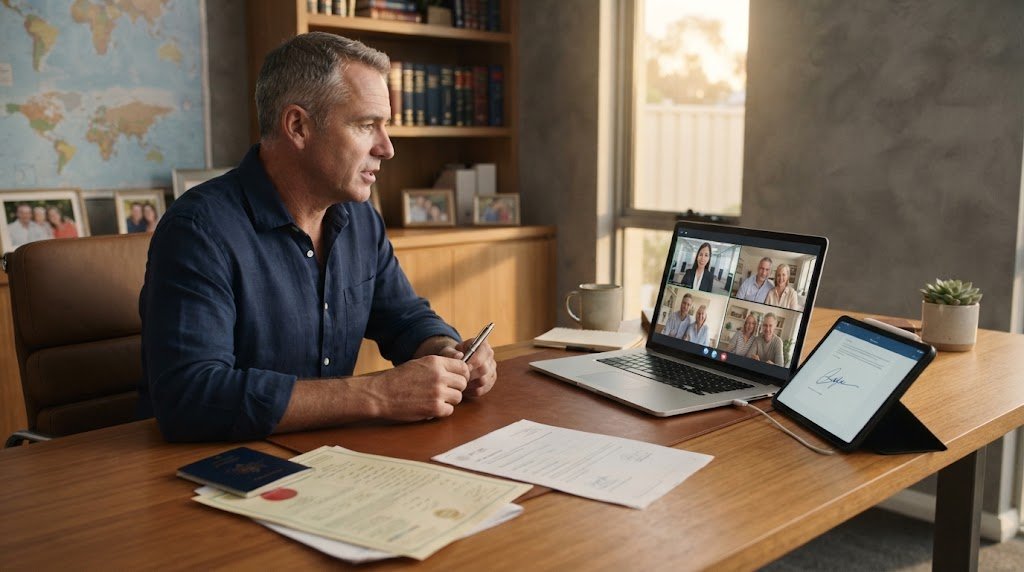
You do not need a UAE visa or a flight to Dubai. Registration happens over a video call with two witnesses.
-
Australia charges no inheritance tax. Capital gains tax can still apply when your family sells the property.
Most Australians who buy in Dubai plan the purchase carefully and then stop planning. They compare communities, check the yield, sign the contract and move on. Almost nobody plans for what happens to that apartment if they die.
The short answer on Dubai property inheritance is this. If you die without a will registered in the UAE, a UAE court decides who gets the property and in what shares. If you register a will with the DIFC Courts, you decide instead. The registration takes about twenty minutes, and you can do all of it from your living room in Australia.
This guide covers the default rules, what a DIFC will costs, how to register one remotely, what your family actually goes through afterwards, and how the Australian Tax Office treats the asset once they inherit it.
Why Australian Wills Fall Short
Dubai property inheritance trips up Australian owners for one simple reason. People assume a will is a will, and that a properly signed Australian document travels with them wherever they own things. It does not work that way once a foreign land registry is involved.
Where assets sit
Succession law follows the asset, not the passport. Dubai property inheritance is therefore handled where the property sits, which means a home registered with the Dubai Land Department falls under UAE rules no matter where the owner lives or which country issued their will.
This catches people out constantly. An Australian will can be perfectly valid in Australia and still leave your Dubai apartment stuck. UAE authorities will want a court document naming the heirs before the title moves, and an Australian will on its own does not produce that document.
Two legal systems
There is a second problem, and it is subtler. If you have an Australian will and later register a UAE will, badly drafted wording in either one can knock out the other. The DIFC Courts warn about this directly and recommend legal advice where a person holds wills in more than one country.
The practical fix is to make each will state clearly which assets it covers. Your Australian will handle your Australian estate. Your DIFC will handle Dubai property inheritance and nothing else. Neither should try to swallow the other.
If you are still at the buying stage rather than the planning stage, our guide on whether Australians can buy property in Dubai covers the ownership side first.

Dubai Property Inheritance Rules Explained
Before you can decide whether you need a will, you need to know what happens without one. The rules changed recently, and a lot of the advice still circulating online is out of date.
Default shares
The UAE changed this area of law significantly. Federal Decree-Law No. 41 of 2022 on Civil Personal Status came into force in February 2023 and created a civil framework for non-Muslims. Sharia principles no longer apply automatically to a non-Muslim who dies without a will.
Under Article 11 of that law, a testator may leave a will covering all property they own in the country to anyone they choose. Where there is no will, half the estate goes to the husband or wife, and the other half is split equally between the children, with no difference between sons and daughters. If there are no children, the estate goes to the parents. If the parents have died, it moves to brothers and sisters in equal shares.
That is a fairer default than many buyers expect. It is still a default, and it may have nothing to do with what you actually want.
Dubai property inheritance
Look at what the default does in a real situation. Say an Australian owner has a second marriage, two adult children from the first marriage, and wants the apartment to go entirely to their current spouse. Under the default split, the spouse receives half, and the two children share the other half.
Nobody has done anything wrong. The law simply applied its own formula because the owner never left instructions.
The table below sets the two paths side by side. The left column is what happens if you do nothing. The right column is what a registered will gives you.
|
Situation |
Without a registered will |
With a registered DIFC will |
|
Who decides the shares |
The law sets fixed shares under Federal Decree-Law No. 41 of 2022 |
You set the shares yourself |
|
Spouse with children |
Spouse takes half, children share the other half equally |
Whatever split you write |
|
No children |
Estate passes to parents, then to siblings |
Whatever split you write |
|
Naming a charity or a company |
Not part of the default formula |
Allowed as a beneficiary |
|
Heirs disagreeing |
Heirs may apply for another law to be applied to the estate |
A registered will overrides that request |
Source for the default shares: Federal Decree-Law No. 41 of 2022 on Civil Personal Status, Article 11, published on the UAE legislation portal.
Read that last row again, because it matters more than the rest. Without a will, any heir can ask for a different law to be applied to the estate, which is how family disputes start. A registered will closes that door. This is the single biggest reason Dubai property inheritance planning is worth doing early rather than later.
How A DIFC Will Works
The DIFC route is the one most overseas owners use, and it was built for exactly this situation. It is also more accessible than people assume, because none of it requires you to live in the UAE.
Who qualifies
The DIFC Courts Wills Service was set up in 2014, and its authority was confirmed by Dubai Law No. 15 of 2017. It exists so non-Muslims with UAE assets can leave clear instructions that a court will enforce.
There are three requirements. You must not be Muslim and must never have been Muslim. You must be at least 18. You must own assets in the UAE, or have minor children living with you in the UAE.
Residency is not on that list. You do not need a UAE visa, an Emirates ID, or a residence permit. An Australian who owns one apartment in Dubai and has never lived there can still sort out their Dubai property inheritance through this route. That single point surprises most of the buyers we speak to at our events, including people who bought purely for the Dubai golden visa through the property route.
Will types
Six types are listed on the fee schedule. Most Australian owners only need to think about two of them.
A Property Will covers up to five real estate properties in the UAE, or shares in up to five. It is completed through an online template. If you own more than five, or you want to cover bank accounts and other assets too, you need the Full Will instead.
The difference that matters most is coverage over time. A Full Will covers everything you own at the date of death, listed or not. A Property Will only covers the properties written into it on the day you registered. Buy a second apartment later, and you have to register a new Property Will to include it.
Dubai Property Inheritance Costs
These are the official registration fees, straight from the court, and they are fixed regardless of what your property is worth. Mirror wills apply to a married couple who register at the same appointment.
|
Will type |
Single will |
Mirror wills for a married couple |
|
Full Will, all movable and immovable assets |
AED 10,000 |
AED 15,000 |
|
Property Will, up to five UAE properties |
AED 7,500 |
AED 10,000 |
|
Guardianship Will, for minor children |
AED 5,000 |
AED 7,500 |
|
Business Owners Will, up to five shareholdings |
AED 5,000 |
AED 7,500 |
|
Financial Assets Will, up to ten accounts |
AED 5,000 |
AED 7,500 |
|
Digital Assets Will |
AED 5,000 |
AED 7,500 |
Put those numbers next to the value of a Dubai apartment and the maths answers itself. A Property Will at AED 7,500 protects an asset usually worth several hundred times that. Cost is almost never the real reason people skip Dubai property inheritance planning. Forgetting about it is.
A booking fee is payable when you reserve the appointment: AED 750 on a single Property Will and AED 1,000 on the mirror version. That amount comes off the service fee, so it is not an extra cost. It becomes non-refundable if you cancel or if you reschedule more than three times.
One detail worth knowing. DIFC Courts' registration fees are not subject to the 5 percent VAT. Lawyer fees are separate, and hiring one is optional. You are allowed to draft your own will or use the online template.
Registering A Will Remotely
You never have to board a plane for this. The entire process runs online, which removes the excuse most overseas owners use for putting Dubai property inheritance planning off another year.
Before the appointment
Everything starts on the Wills Service online portal. You complete the template, upload your documents, then book and pay for the signing appointment.
For a Property Will, you need a copy of your passport, passport copies for your two witnesses, and proof of ownership for each property. That means the title deed, or the Oqood certificate if the unit is still off plan. Yes, off-plan units can go into a Property Will, as long as the Oqood has been issued. Anyone holding contracts from our off-plan Dubai property listings should check that the certificate is in hand before booking.
Pick your witnesses carefully. They must be over 18 with valid photo ID, and they cannot be beneficiaries or guardians in the will, or married to one. Your executor can act as a witness if they meet those rules.
On the call
Every DIFC will be signed electronically, so the appointment runs over a video conference. You and both witnesses can join from anywhere in the world, and you can each join from a different location.
You need two devices between you. One to see and speak to the compliance officer, and one touchscreen device to draw your signature. The officer checks IDs, reads through the terms of the will, then sends the signing links. The whole thing takes roughly twenty minutes, and you download the registered copy at the end.
Two practical warnings from the DIFC Courts wills FAQ. Translators are not accepted, so you need working English to complete the appointment. And beneficiaries should not be in the room during signing, because their presence creates grounds to challenge the will later.
What Your Heirs Face Later
Registering the will is your half of the job. The other half falls to your family, and it helps to know what that looks like so you can leave them prepared.
Probate first
Dubai property inheritance runs through probate before anything else happens. When the owner dies, the executor contacts the DIFC Courts with a copy of the death certificate and is guided through the process from there. The DIFC Courts state that where the file is complete and the case is straightforward, a Grant of Probate is normally issued within a few weeks.
The probate application fee is USD 1,500. The DIFC Courts convert at USD 1 to AED 3.6725, which puts it near AED 5,500. Probate fees are fixed and do not scale with the value of the estate, so a two million dirham apartment and a ten million dirham villa cost the same to process.
Beyond registration, the Wills Service charges for a handful of other actions your executor or your future self may need.
|
Other Wills Service fee |
Amount |
|
Grant of Probate application |
USD 1,500 |
|
Modifying a registered will |
AED 550 per will |
|
Inspecting a will |
AED 375 |
|
Withdrawing a will |
No fee |
|
Standing search in an estate |
AED 1,500 |
|
Non-refundable amount if you cancel an appointment |
AED 1,000 per will |
The modification fee is the line to remember. At AED 550, updating a will after a life change costs less than a night in a Dubai hotel, so there is no financial reason to leave an out-of-date document sitting on the register.
Title transfer
Probate is not the last step. The property is still registered in the deceased owner's name, and the Dubai Land Department will not move it without a court letter.
That step is called Inheritance Title Transfer. The heirs submit the legal notification of inheritance, ID for every heir, passports for heirs living outside the UAE, and an official letter from the courts addressed to the DLD requesting the transfer. If there is a mortgage, the bank must issue a no-objection letter first.
Here is what the registry itself charges once that paperwork is in order.
|
DLD inheritance title transfer fee |
Amount |
|
Collected from the heirs, per property |
AED 1,000 |
|
Issuing the title deed |
AED 250 |
|
Apartment map |
AED 250 |
|
Villa map |
AED 250 |
|
Knowledge and innovation fee per drawing |
AED 20 |
|
Service partner fee |
AED 130 plus VAT |
Notice how small that number is. Transferring a property to heirs costs a flat AED 1,000 regardless of value, while a normal sale carries a 4 percent transfer fee. The expensive part of Dubai property inheritance is never the registration. It is the court process that comes before it.
Australian Tax On Inherited Property
Once the property lands in your family's hands, the Australian side of the ledger opens. This part surprises people in a good way, then catches them years later.
No death duty
Start with the good news. The Australian Taxation Office states plainly that there are no inheritance or estate taxes in Australia. Death duties were abolished decades ago. Your children will not be taxed simply for receiving the apartment.
Capital gains later
The tax arrives later, and in two forms.
Rental income is treated normally. If your heirs keep the apartment and rent it out, that income goes into their Australian return like any other rental income. Anyone already running numbers on Dubai investment properties should model this for the next generation, not just for themselves.
Capital gains tax applies when they sell. This is the part of Dubai property inheritance that reaches back into Australia. The ATO position is that CGT may apply on disposal of an inherited asset, and the calculation depends on the cost base carried over from the deceased owner. Get the cost base wrong and the bill is wrong.
This is where an Australian tax adviser earns their fee. Keep your purchase contract, your Dubai Land Department transfer receipts and your fee records somewhere your executor can find them. Those documents are what set the cost base years from now. General guidance like this is not tax advice, and every family situation differs.
Mistakes Australian Owners Make
Almost every Dubai property inheritance problem we see comes from one of two habits. Owners register a will and then never look at it again, or they buy a second property and forget the first document does not stretch to cover it.
Off-plan gaps
The most common gap is buying a second property and forgetting the will. A Property Will only protects the properties listed in it. The new apartment sits outside that protection until you register a modified will, which costs AED 550.
Owners with a growing portfolio often find the Full Will cheaper over a decade, because it covers assets acquired later without any re-registration.
Marriage and divorce
This one causes real damage. Under the DIFC rules, getting married after registering a will revokes that will entirely, unless the will already stated your intention to marry that specific person. People remarry, never think about the document they signed years earlier, and leave behind nothing.
Divorce works differently. It does not void the whole will. It treats the former spouse as having died on the date the marriage ended, which cancels their gift and leaves the rest standing.
Either event should trigger a review. So should the birth of a child, a move between countries, or buying another unit from the kind of projects covered in our guide to buying property in Dubai.
Talk To Us Before You Sign Anything
A will costs a few thousand dirhams. Sorting out an estate without one costs your family months of court process while the apartment sits frozen and the service charges keep arriving. Dubai property inheritance is one of the few parts of overseas investing you can fix completely in a single afternoon.
If you own property in Dubai from Australia, or you are about to buy, come and talk to our team at the Dubai Property Expo Australia. Register your interest today and bring your questions with you.
Frequently Asked Questions
Will my Australian will cover my Dubai property?
Not on its own. Dubai property inheritance is governed by UAE law because that is where the asset sits, and the authorities need a court document naming the heirs before the Dubai Land Department will move a title. An Australian will does not produce that document by itself.
What happens to Dubai property when the owner dies without a will?
Federal Decree-Law No. 41 of 2022 sets the default for non-Muslims. Half goes to the surviving spouse and half is divided equally between the children, sons and daughters alike. Where there are no children, the estate passes to the parents, and after that to brothers and sisters.
How much does a DIFC will cost for one property?
A Property Will costs AED 7,500 for a single registration, or AED 10,000 where a married couple register mirror wills together. A Full Will costs AED 10,000 single and AED 15,000 mirror. These fees are not subject to VAT.
Can I register a DIFC will from Australia?
Yes. Registration is done by video call, and neither you nor your witnesses need to be in the UAE. You do not need a UAE residence visa. You do need two devices during the appointment, one for the video call and one touchscreen device for signing.
Can off-plan property be included in a Dubai will?
Yes, if the Oqood certificate issued by RERA is available. That certificate is your proof of ownership for a Property Will. For a Full Will, proof of ownership is not required at the time of registration.
How long does Dubai probate take with a registered will?
The DIFC Courts state that once they hold the required information and the case is straightforward, a Grant of Probate is normally issued within a few weeks. The Dubai Land Department then lists eight working hours as the service time for the title transfer itself.
Is there inheritance tax on Dubai property for Australian beneficiaries?
No. The ATO confirms there are no inheritance or estate taxes in Australia. Capital gains tax can apply when the beneficiary sells the property, and rental income is taxable in the normal way while they hold it.
What happens to my will if I get married?
A subsequent marriage revokes a registered DIFC completely, unless the will clearly states your intention to marry that person. You need to register a new will after the wedding.